Ghana’s vibrant events industry, from music festivals and corporate conferences to weddings and trade shows, is undergoing a tech-driven transformation. In 2025, Artificial Intelligence (AI) is making its way into event planning and management, enhancing everything from ticketing to stage production. This analysis explores five key AI integration trends in Ghana’s events scene and features …

Ghana’s vibrant events industry, from music festivals and corporate conferences to weddings and trade shows, is undergoing a tech-driven transformation. In 2025, Artificial Intelligence (AI) is making its way into event planning and management, enhancing everything from ticketing to stage production.
This analysis explores five key AI integration trends in Ghana’s events scene and features insights from local event professionals.
1. Smart Ticketing and Chatbot Concierge
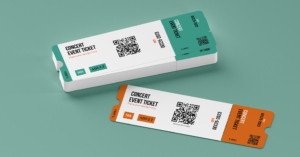
Gone are the days of solely relying on human ticket clerks or static online forms. Event organizers in Ghana are adopting AI-enabled ticketing platforms that make the process smoother for attendees.
For example, eGotickets, Ghana’s leading ticketing service, now uses a WhatsApp chatbot to help customers discover events and purchase tickets conversationally. A simple “hello” to their WhatsApp number triggers an AI-powered assistant that can list upcoming shows, handle bookings, and answer FAQs on venue or pricing – all without human intervention.
These chatbots, often powered by AI natural language processing, understand queries in English and sometimes even respond to common Twi phrases, offering a personalized touch. Beyond ticket sales, AI also helps prevent fraud – machine learning algorithms analyze purchase patterns and flag suspicious bulk buys or duplicate QR codes, an important feature in Ghana where ticket fraud has been a challenge for big concerts.
The result is faster check-ins and happier attendees. At the 2024 AfroNation concert in Accra, organizers reported that majority of attendees used digital tickets and an AI-based gate control system scanned QR codes, significantly cutting down queue time. Expect AI to further streamline ticketing with features like dynamic pricing (adjusting ticket prices based on demand in real time) and facial recognition check-in in the near future – though the latter will need to navigate privacy concerns and current preferences for QR and NFC passes.
2. Personalized Marketing & Attendee Analytics
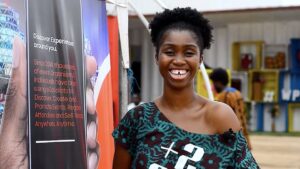
Marketing an event in Ghana often means hitting all the right notes – literally and figuratively. AI is helping event marketers tailor their outreach and content to engage the target audience more effectively.
Using AI-driven analytics on social media engagement and past event data, organizers can segment potential attendees and send personalized recommendations. For instance, if Kofi attended a tech expo and a music festival last year, an AI system might flag him as someone who’d be interested in a upcoming “music tech” conference, and he’ll receive a custom invite. “Our email open rates jumped after we implemented AI segmentation,” notes Ama Boateng of a local event promotions company, referring to an AI tool that grouped their contact list by interest and optimized send times. On social media, AI tools analyze which creative (flyer, video, meme) resonates most and auto-adjust campaigns.
This kind of smart marketing was employed during the 2025 Chale Wote Street Art Festival promotions – the organizers used an AI platform to test dozens of ad variations, and it turned out short drone-shot videos of past festivals got the most clicks from art enthusiasts aged 18-30. They doubled down on that, yielding record pre-event engagement. Once attendees register, AI keeps working: events now frequently have AI analytics dashboards that track ticket sales by demographic, monitor social media mentions (sentiment analysis to gauge excitement or complaints), and even predict no-show rates.
One Ghanaian event software startup offers an AI “attendee predictor” which crunches data like weather, day-of-week, and online chatter to forecast turnout – helping planners adjust food, seating, etc. accordingly. The power of data means events can be more responsive and attendee-centric. For instance, if analytics show low interest from a certain region, organizers can boost targeted ads or arrange transport from that region. All this leads to better attendance and a more satisfied audience because the event content and communication feel curated for them. As Kwesi Agyeman of EventHub Ghana says, “AI is becoming the secret weapon in understanding our crowds – it’s like having a crystal ball, except it’s data from your own event history.”
3. AI-Powered Scheduling and Logistics
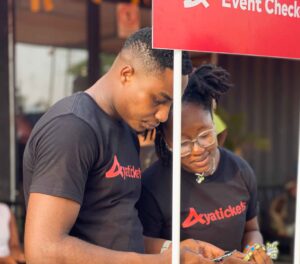
Planning the schedule and logistics of an event – especially large conferences or multi-day festivals – is a complex puzzle. Enter AI scheduling assistants. These tools can auto-generate optimal event agendas based on numerous parameters.
In Ghana, a few forward-thinking conference organizers have used AI to plan breakout sessions and speaker line-ups. AI scheduling takes into account speaker availability, anticipated audience interest (gauged from pre-event surveys or online registration choices), and even real-time data like traffic conditions (to space sessions with enough transit time for attendees).
For example, the organisers of the “Accra Tech Summit 2025” fed their AI assistant with topics and speaker profiles; the AI suggested a schedule that paired related topics back-to-back and left buffer slots where historically people tend to need breaks. It also flagged that two popular sessions were initially set concurrently and recommended moving one to avoid forcing attendees to choose – a nuance gleaned from analyzing past attendee feedback. “It saved us from a major headache and our participants didn’t have to miss talks they were interested in,” the program manager noted.
On the logistics front, AI helps optimize resource allocation. Venues in Ghana are now experimenting with AI-driven layout tools that can design floor plans for trade fairs or concerts, optimizing booth placements or seating for flow and safety. AI can simulate crowd movements; for instance, for a big exhibition at the Accra International Conference Centre, software modeled how 5,000 visitors would navigate the halls and identified choke points – allowing organizers to widen an aisle and reposition a food court before finalizing the floor plan.
Routing and traffic management around events is another beneficiary: city authorities in Accra have begun using AI-based traffic monitoring (integrated with Google Maps data and city CCTV) to manage traffic during mega events like football matches or independence day parades. They adjust signal timings and suggest detours in real-time, reducing congestion for event-goers.
At a micro level, AI chatbots (as mentioned) and planning assistants act like virtual event coordinators, sending automated reminders to suppliers (“Deliver stage lights by 10 AM tomorrow – here’s the loading dock info”) and even monitoring tasks. Local event planning startup PlanIt Ghana piloted an AI task manager that notified the team when the floral decorator was running late based on GPS and offered alternative decor ideas from its database as contingency. In short, AI is becoming the diligent intern every event planner wants – one that never sleeps and catches the small stuff.
4. Virtual Staging and Immersive Experiences
One of the flashiest trends is the blending of physical and virtual event elements using AI. Virtual staging involves using AI and augmented reality (AR) to enhance the stage or venue ambiance. Ghana’s entertainment events are tapping into this – think concerts with AR effects that the audience can see through their phones, or AI-generated visuals responding to live music.
In late 2024, a popular artist’s album launch in Accra featured an AI-generated backdrop that evolved with each song – when he performed a track titled “Savannah”, the LED screens (guided by an AI visuals system) bloomed with generative art of northern Ghana’s savannah landscape, wowing the crowd. The creative director explained that they trained an AI model on Ghanaian art motifs to produce unique visuals in sync with the setlist. This kind of dynamic stage design is becoming more accessible. Even corporate events are using simpler versions: at a banking conference, instead of a static PPT, an AI system displayed key words from speeches in real-time in an artistic word cloud on screen.
Hybrid events, combining in-person and virtual attendance – surged during the pandemic and remain popular for inclusivity. AI is a backbone for these. For virtual attendees, AI can provide features like real-time translation captions (allowing, say, a French-speaking investor to follow a startup pitch at a Ghanaian demo day with translated subtitles) and smart camera switching (AI directs the livestream, focusing on the current speaker or panning the audience when appropriate).
Hybrid event platforms with AI matchmaking are also trending: attendees, whether on-site at Kempinski Hotel or tuning in from Lagos, can input interests and an AI will suggest networking connections or break-out discussions. “It’s like getting introduced by the host to exactly who you should meet,” says Nana Sekyere, who experienced this at a regional entrepreneurship summit. In Ghana, where events like trade fairs attract international participants, such AI-powered matchmaking and translation greatly enhance engagement across languages and geographies.
Additionally, immersive tech like AR is popping up in consumer-facing events. For example, at the 2025 Accra Food Festival, visitors could point their phone at a dish at a stall and an AR overlay (powered by image recognition AI) would pop up showing ingredients and chef’s bio. It’s gimmicky but fun – and keeps attendees interacting. Expect more experiments with VR tours (imagine a virtual reality tour of an exhibition booth for those at home) and AI-generated entertainment (perhaps a DJ set where an AI mixes tunes based on crowd mood) as innovators push the envelope.
5. AI for Feedback and Continuous Improvement

The event isn’t over when it’s over – post-event feedback is crucial, and AI is supercharging how organizers gather and act on it. Traditional feedback forms often get low response rates.
Now, AI sentiment analysis can gauge attendee satisfaction without needing everyone to fill a survey. By scanning social media posts, comments, and even the tone of emails or chat messages about the event, AI tools produce an instant sentiment report: e.g., 85% positive sentiment, main topics “sound quality”, “registration process”, “keynote speaker”.
For instance, after a major fashion show in Accra, organizers used an AI tool to scrape Twitter and Instagram mentions. It highlighted that while most loved the designs, many complained the show started late – a quick insight without reading hundreds of posts. This aligns with global trends where AI can “read the room” at scale. Additionally, some events deploy AI chatbots to solicit feedback conversationally.
Rather than emailing a form, attendees get a WhatsApp ping: “Hi! This is the Expo Bot. What did you think of the venue?” The chatbot uses natural language processing to record qualitative feedback. People often respond more casually with rich insights (“Parking was a nightmare, chale!” or “Loved the panel on agritech.”). The AI categorizes these comments for organizers to review. Event managers in Ghana appreciate this because it feels like chatting rather than a formal survey – driving higher engagement.
Another clever use: AI-driven follow-up recommendations. If you attended a business conference, the platform might email you links to session recordings or articles on topics you showed interest in (based on which agenda items you added to your calendar or questions you asked). This extends the event’s value and keeps attendees engaged for future editions. It’s akin to Netflix recommending new shows – but here “Because you attended the fintech workshop, you might like this upcoming fintech webinar”. Local professional associations are leveraging this to keep membership active.
Finally, AI helps organizers improve future events by learning from data. The more events run through these AI systems, the more insights they gather on what works. As one events analytics startup founder put it, “Our AI basically becomes an event consultant – it will tell you next time, send invitations 1 week earlier based on past RSVP behavior, or pick a different venue because people from Tema won’t drive to this location on weekdays.” It’s continuous improvement on autopilot. Ghanaian event planners, known for being resourceful, are excited to have these AI tools as new additions to their teams. As Gloria Buckman, a veteran planner at PlanIt Ghana, noted at a recent industry meetup, “AI won’t replace our creative instincts or human touch – Ghanaian events thrive on personal connection. But it’s that small ‘osei bonus’ (extra) that can help us plan smarter and delight our clients.”
Conclusion
The integration of AI into Ghana’s events industry is still in early stages, but the trends are clear and growing. From smarter ticket sales to dazzling AR experiences, AI is helping event professionals deliver more personalized, efficient, and memorable events. Crucially, the Ghanaian context adds its own flavor.
We value community and face-to-face energy, so AI is being used not to eliminate human elements but to enhance them – freeing organizers from mundane tasks to focus on creativity and hospitality. As 2025 unfolds, we can expect AI to become as common behind the scenes as the MC on stage. The consensus among local event experts is that those who embrace these tech tools (however intimidating at first) will have the edge.